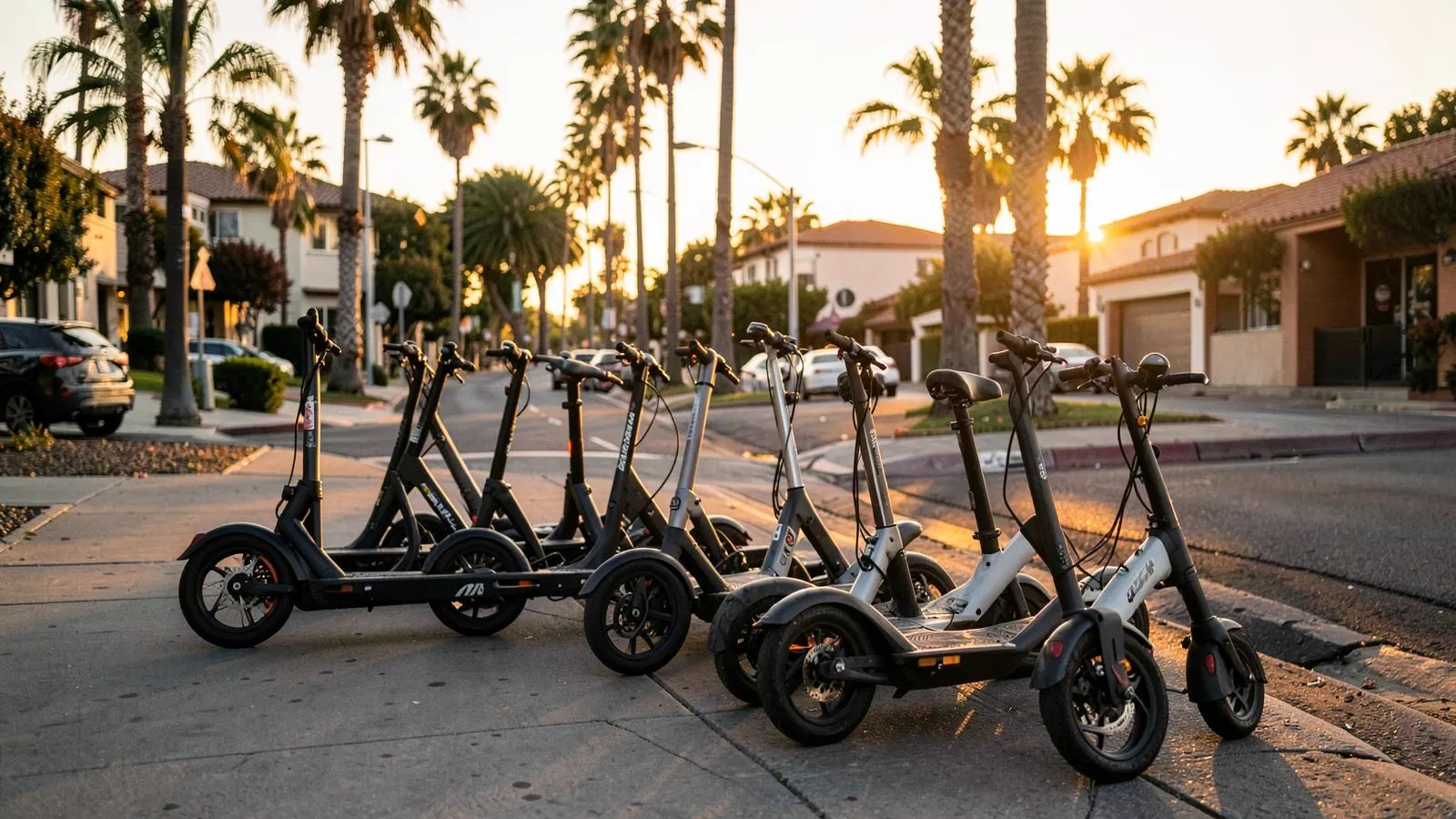
Shared electric scooters are part of daily traffic on Santa Monica Boulevard, Sunset and the side streets between them. They are also involved in a category of injury that does not fit neatly into either a car claim or a bicycle claim, and riders who are hurt often find that the insurance answers are not obvious.
The rules that apply to scooters in California
Motorized scooters are governed by their own set of Vehicle Code sections. Section 21235 sets out rider duties: a valid driver's license or instruction permit is required, riders under 18 must wear a helmet, and a scooter may not carry a passenger. Section 21235 also prohibits riding on a sidewalk except as needed to enter or leave adjacent property. Section 22411 caps motorized scooter speed at 15 miles per hour regardless of the posted limit, and section 21229 generally requires riding in a bicycle lane where one is available.
These rules matter after a crash for one reason: California uses comparative fault. A rider who was on the sidewalk, or without a helmet where one was required, does not lose the claim, but the insurer will argue that the rider's own conduct contributed. Our article on comparative fault in LA injury claims explains how that allocation works in practice.
Who might be responsible
Scooter injuries fall into a handful of recurring patterns, and each points to a different defendant.
- A driver turns across the rider. The most common serious scooter collision is a left turn or a right hook by a motorist who did not see a scooter in the bike lane. This is an ordinary auto liability claim, and the driver's policy is the primary source of recovery.
- A door opens into the lane. Vehicle Code section 22517 prohibits opening a vehicle door into moving traffic when it is unsafe to do so. Dooring cases usually turn on witness statements and the position of the damage.
- The scooter fails. A brake that does not engage, a stem that separates, a throttle that sticks. These are product and maintenance questions, and preserving the actual scooter — or at least its ID number, time-stamped photos and the trip record in the app — is essential.
- The road surface caused the fall. A pothole, an open utility cut or a raised panel points to a public entity, and that changes the deadline entirely.
- A pedestrian is struck by a scooter. An injured pedestrian brings a negligence claim against the rider; homeowner's or renter's liability coverage sometimes responds.
The insurance gap
A motorized scooter is not a motor vehicle for insurance purposes in the way a car is, and most personal auto policies do not extend liability coverage to a scooter a policyholder rents. Rental operators require riders to accept user agreements that generally disclaim liability and often direct disputes to arbitration. Some riders are surprised to learn their own uninsured motorist coverage may still apply if they were struck by an uninsured driver while on a scooter — coverage often follows the person, not the vehicle. Reading the actual declarations page and policy language is the only way to know, and it is worth doing before speaking with any adjuster.
Injuries and documentation
Scooters have small wheels, no suspension and no protection. Riders go over the handlebars, which produces wrist and forearm fractures, facial injuries, shoulder separations and head injuries. Helmets are not required for adult riders in California, but a rider without one who strikes their head should be evaluated the same day; symptoms of a concussion can appear hours later. If a head injury is involved, see our traumatic brain injury page for what documentation these claims require.
Keep the trip receipt and app history, the scooter's ID number, photographs of the scooter and the roadway, and the names of witnesses. App data disappears from a rider's view faster than people expect, and screenshots taken the same week are worth more than a request made months later.
Deadlines
A claim against a private driver, a rider or a scooter company generally follows the two-year deadline in Code of Civil Procedure section 335.1. If the roadway itself is the problem, a written government claim must usually be presented within six months — see our article on injury claims against the City of Los Angeles.
Hollywood Injury Law Center represents injured riders and pedestrians across Los Angeles County. Related pages include our bicycle accident and pedestrian accident practice areas. Consultations are free and attorney's fees are charged on a contingency basis — no fee unless you win. Call (323) 850-0101 or request a free case review.
This is general information, not legal advice. Prior results do not guarantee a similar outcome.