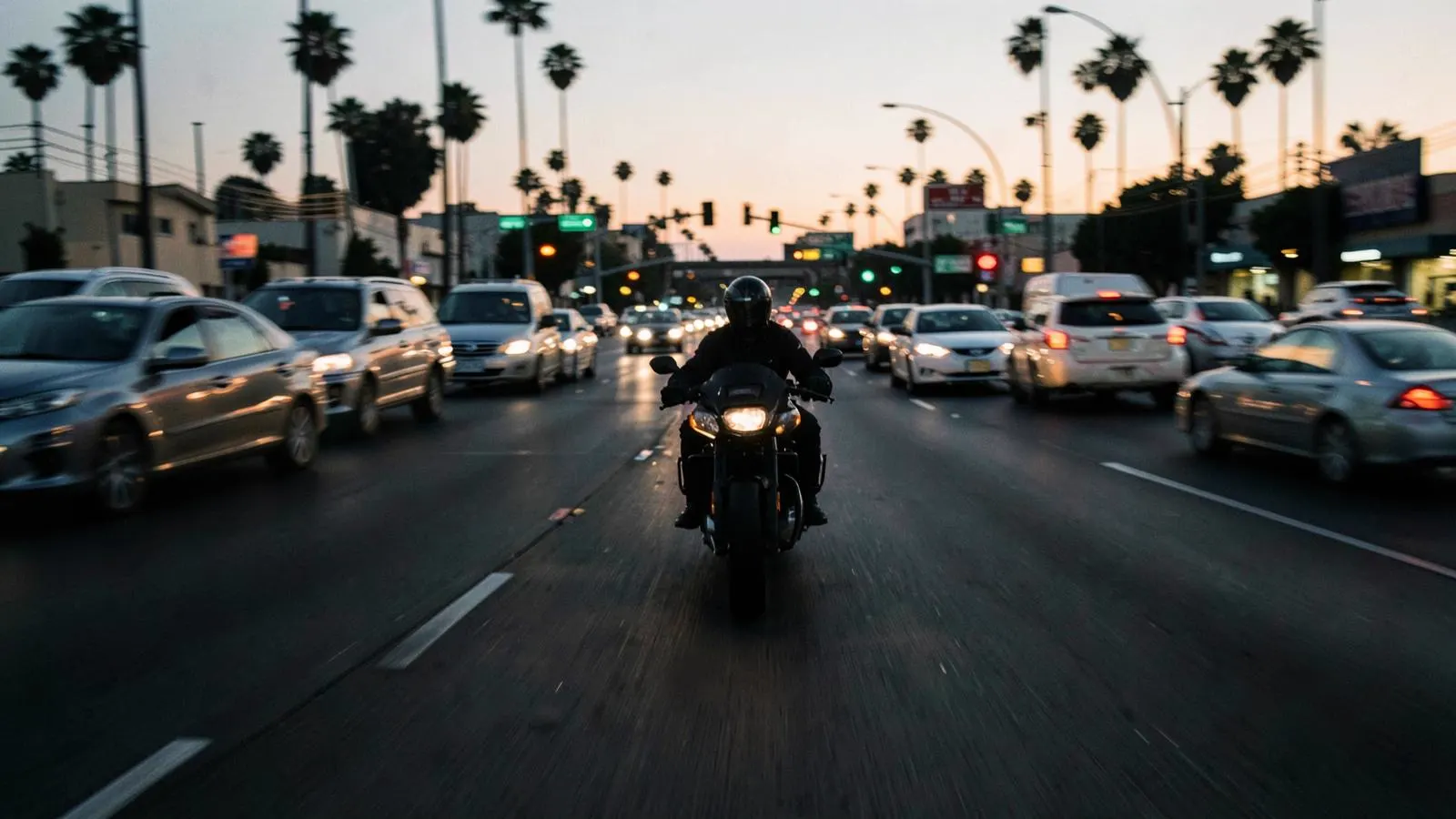
A motorcycle lane splitting accident can leave you hurt, blamed, and buried in bills before you know what happened. In Los Angeles, where riders often use lane splitting to navigate through heavy traffic, the situation becomes even more complex because many drivers and insurers still misunderstand the legal rights associated with this practice.
If you were a motorcyclist hit while riding between lanes, do not assume you caused the crash. Lane splitting is a common practice on California roads, and state law may still allow you to recover compensation even if the other side tries to pin the fault on you.
Key Takeaways
- Legal Rights: Lane splitting is a legal practice in California, and engaging in it does not automatically make you at fault for an accident.
- Comparative Negligence: California follows pure comparative negligence, meaning you can still recover damages even if you are partially at fault, with your compensation reduced by your percentage of blame.
- Evidence is Essential: Success in these claims relies on concrete evidence like helmet-cam footage, photos of the scene, witness statements, and detailed medical records to combat insurer bias.
- Safety Guidelines: While legal, insurers often reference CHP safety guidelines—such as speed differentials—to argue that a motorcyclist was riding recklessly or too fast for the conditions.
Lane splitting is legal in California, but fault still matters
California does not prohibit lane splitting, and it is the only state that addresses the practice by statute. Vehicle Code section 21658.1 defines lane splitting as riding a two-wheeled motorcycle between rows of stopped or moving vehicles in the same lane, on divided and undivided roads alike, and authorizes the California Highway Patrol to develop educational safety guidelines for it. Read the section carefully and you will notice what it does not say: it defines and recognizes lane splitting rather than expressly declaring it legal. The practical position for riders is the same either way, because no California law forbids it.
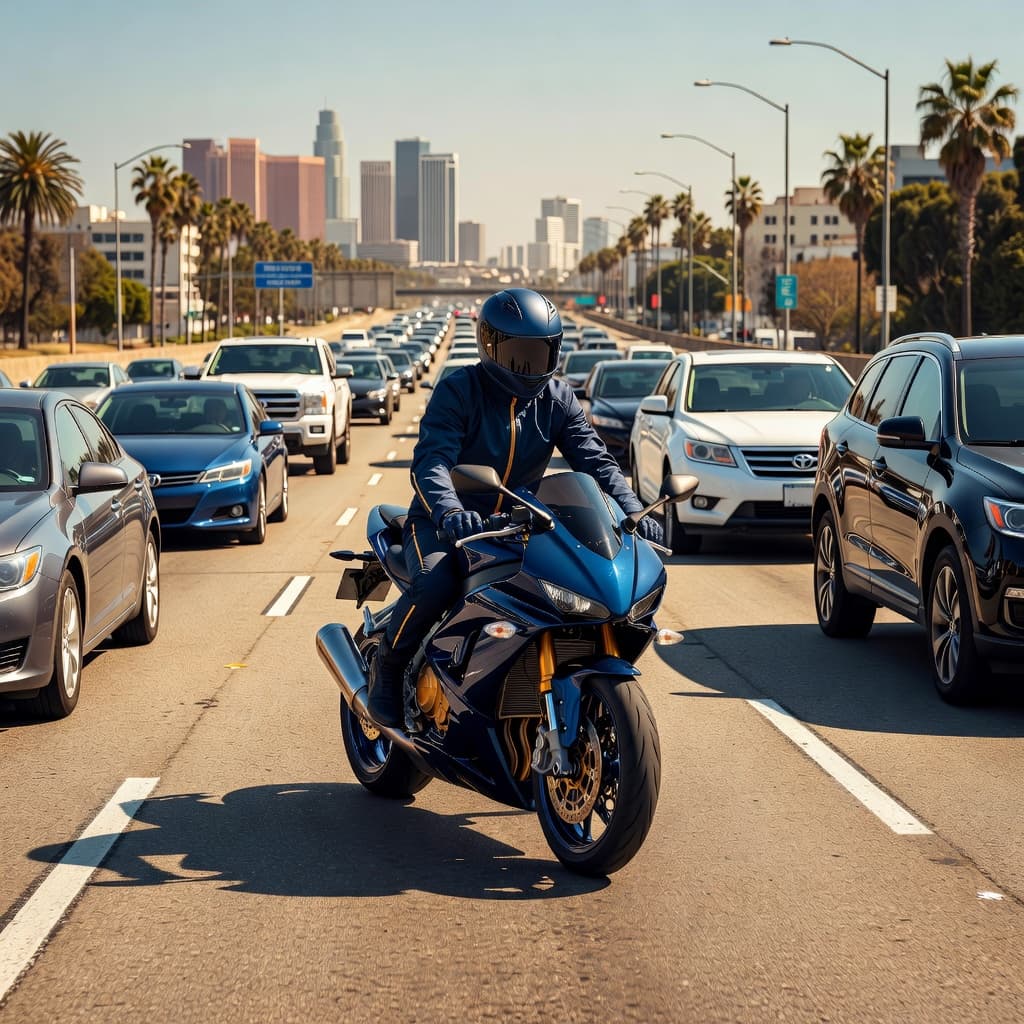
Legality does not automatically settle an insurance claim. A driver may claim you were coming out of nowhere, or an insurance adjuster may act as if the actions of the motorcyclist were reckless by default. That is not how California fault rules work.
The better question is what each person did in the seconds before impact. Did the driver drift across the line without checking mirrors? Did someone open a door, crowd the lane, or speed up to block you? Those facts matter more than the simple fact that you were splitting lanes.
The California Highway Patrol provides practical guidance for those on two wheels. These motorcycle safety recommendations suggest that your speed should stay close to surrounding vehicles, usually no more than 10 mph faster than the cars you are passing. Furthermore, the guidelines suggest that lane splitting is safer when you are navigating through stopped traffic or slow-moving traffic traveling at 30 mph or less. Because these are guidelines rather than automatic traffic violations, insurers often point to them when they argue that a motorcyclist was riding too fast for the specific road conditions.
Lane splitting can be legal and still disputed. Your claim turns on conduct, timing, and proof.
That is why a motorcycle accident during lane splitting needs real evidence. Photos, helmet marks, scrape patterns, video, and witness accounts can show whether the driver made a sudden, unsafe move. They can also demonstrate whether you were visible and riding in a reasonable way.
Why Los Angeles lane-splitting claims get disputed
Los Angeles traffic congestion creates tight gaps and forces frequent lane changes. On the 101, 405, and major surface streets, drivers often drift over lane lines while checking phones, maps, or blind spots too late. When a bike is involved, many drivers rely on the same defense: they claim they never saw the motorcyclist.
That statement does not erase their duty to follow traffic laws. California motorists must always look before merging or switching lanes. If a car cuts across your path, the driver may be primarily responsible for the accident, even if you were engaging in lane splitting.
California also utilizes pure comparative negligence when determining fault. This means you can still recover damages if you were partly responsible for the incident. Your award is simply reduced by your specific share of the blame. If you are found 20 percent at fault, your recovery is reduced by 20 percent rather than barred.
A few common fact patterns shape these claims:
| Crash pattern | Common defense argument | Evidence that helps you |
|---|---|---|
| Driver changes lanes into the motorcyclist | The rider was in my blind spot | Witnesses, side-impact damage, video |
| Driver opens a door or blocks the motorcyclist | The rider should have stopped | Photos, statements, door damage |
| You were moving much faster than traffic | The motorcyclist created the hazard | Speed data, skid marks, expert review |
| Crash near an on-ramp or exit | The gap was too tight | Road layout, traffic flow, lane position |
The takeaway is simple. Liability is rarely decided by a single label. A lane splitting accident near an exit ramp may look different to an insurer than a crash in stopped freeway traffic. On the other hand, a hostile driver who swerves to close a gap can change the dynamics of the case completely.
California is unusual on this point, and this rider guide on lane-splitting laws shows how few states allow the practice so broadly. That fundamental difference is one reason why out-of-state insurers and drivers often misunderstand California traffic laws.
What to do after a lane-splitting crash
After a crash, your first job is medical care. Adrenaline can hide a concussion, wrist fracture, torn knee, or back injury for hours. If paramedics recommend treatment, take it. If you go home first, get checked as soon as you can.
A lot of the advice under what to do after a car accident in California also applies after a motorcycle accident, but riders need to protect more evidence to support a personal injury claim. Try to keep your helmet, gloves, jacket, and bike in the same condition until photos are taken, as the gear worn by the motorcyclist is often key evidence.
If you can do so safely, take these steps:
- Call 911 and ask for police and medical help.
- Photograph the vehicles, lane lines, road surface, damage, and your injuries.
- Get names and contact details for witnesses before they leave.
- Do not admit fault or argue about lane splitting at the scene, especially if the collision occurred while navigating through stopped traffic.
- Do not give a recorded statement to the insurer before you get legal advice.
Next, follow your treatment plan. Missed appointments give the insurer room to claim you were not badly hurt. Keep receipts, wage records, repair estimates, and notes about pain, sleep, and missed work. Small details often become large parts of a claim.
You should also save digital proof. Keep helmet-cam footage, phone photos, text messages, tow bills, and the names of officers who responded. If nearby stores or homes may have cameras, move fast. Video can disappear within days.
When the police report is ready, get a copy and review it for basic errors. A wrong lane number or a missing witness name can matter later. If the police report blames you, that is not the end of the case. Reports help, but they do not decide civil liability on their own.
Insurers often handle these files as if they were a routine claim for compensation for car accident losses. Your injuries may be far worse. A rider has less protection than a driver in a closed vehicle, so the same impact can cause road rash, fractures, surgery, or long rehab. That is why early records matter so much.
Damages, deadlines, and finding the right help
A motorcycle lane splitting accident claim can include more than your ER bill. You may be able to seek payment for follow-up care, surgery, rehab, lost wages, reduced future earnings, bike damage, and pain and suffering. If a family member died, a wrongful death claim may also be possible.
Time matters. In California, most personal injury lawsuits must be filed within two years under Code of Civil Procedure section 335.1. If a city bus, public road defect, or other public entity played a role, the deadline may be much shorter, often six months to present a claim. Many Los Angeles cases settle, but if yours does not, it may be filed in Los Angeles County Superior Court.
No article can tell you exactly what your case is worth. The facts, medical records, and comparative negligence make the difference. If you have searched for a personal injury lawyer in Los Angeles or an accident attorney near me, focus on whether the firm handles motorcycle crashes where proving fault is complicated.
You may also compare a car accident lawyer in Hollywood, CA, with a boutique Los Angeles personal injury law firm that knows how lane splitting claims are attacked. That matters because these cases are not simple rear-end collisions. The other side often tries to turn a legal riding move into a blame shortcut.
Many injured riders look for a no win no fee attorney in Los Angeles because they cannot pay upfront. That is a fair concern. Hollywood Law Center has represented injured people since 2000 and works on contingency. You pay no fee unless the firm wins. Consultations are always free, and help is available in English and Spanish, Hablamos Español. California law also protects you regardless of immigration status.
Because motorcycle claims often draw bias, the first settlement offer may miss the mark. The adjuster may downplay future care for the injured motorcyclist, ignore lost self-employment income, or blame your injuries on the way you rode. A lawyer can gather medical proof, traffic footage, and witness statements before that story hardens.
If you are searching how to file a personal injury claim, California law allows you to start with guidance, not guesswork. A free case review personal injury consultation can help you understand deadlines, fault issues, and whether the insurer is trying to settle cheap.
Frequently Asked Questions
Is lane splitting legal in California?
Lane splitting is not illegal in California. Vehicle Code section 21658.1 defines the practice and directs the California Highway Patrol to develop educational guidelines for it — the only statute of its kind in the country. Strictly read, the section recognizes lane splitting rather than expressly authorizing it, but the effect for riders is that no California law prohibits riding between rows of stopped or moving vehicles. Being within your rights does not stop an insurer from attempting to shift blame, so the specific circumstances of the crash remain critical to your claim.
Can I still get compensation if I am partially at fault for the accident?
Yes, California uses a pure comparative negligence system. You can recover damages even if you share some responsibility for the crash, though your total award will be reduced by the percentage of fault assigned to you.
Why do insurance companies often deny or downplay lane splitting claims?
Insurers and drivers frequently misunderstand California's lane splitting laws or hold biases against motorcyclists. Adjusters may attempt to characterize the practice as inherently reckless to reduce their payout, regardless of whether the driver made an unsafe lane change or failed to check their mirrors.
What should I do immediately after a lane-splitting accident?
Prioritize your medical health by seeking professional treatment, as adrenaline can mask serious injuries. Secure evidence by photographing the scene, obtaining witness contact information, and preserving your riding gear, while avoiding recorded statements to insurers until you have consulted with an attorney.
Final thoughts
A legal lane splitting maneuver does not forfeit your right to recover compensation after a crash. What truly matters is how the collision occurred, how effectively evidence is preserved, and how quickly you take action to protect your legal rights. While lane splitting is a common practice, prioritizing motorcycle safety remains essential for every rider on the road.
If you are a motorcyclist who was injured in Los Angeles, Hollywood, or throughout Southern California, it is important to speak with a firm that handles injury claims on a no-fee-unless-you-win basis. Hollywood Law Center, located at 6253 Hollywood Blvd., Suite 205, Hollywood, CA 90028, provides dedicated support and offers free consultations in both English and Spanish.
Call 323-850-0101 to schedule a free case review. You will not pay attorney fees unless the firm successfully wins your case.