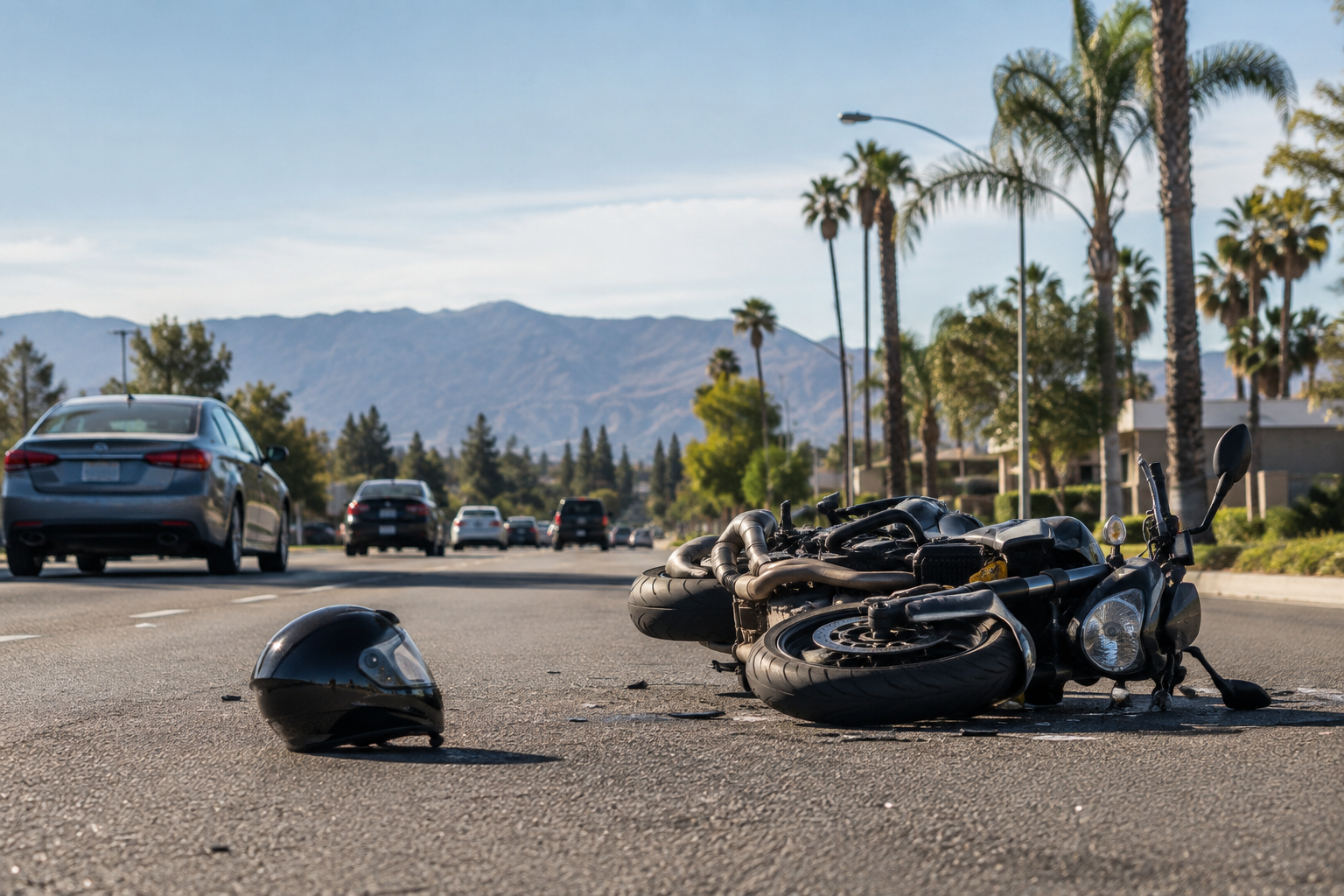
No supplied crash data identifies which Pomona roads are most dangerous for motorcycle riders. Rather than guess, riders should treat every road as a possible hazard and know how California law protects them after a crash.
No supplied crash data identifies which Pomona roads are most dangerous for motorcycle riders. Road danger can change with traffic, visibility, pavement conditions, construction, and driver behavior, so it would be unsafe to label a particular Pomona road without reliable evidence.
Why Motorcycle Crashes Happen
Motorcycles are smaller than passenger vehicles and can be harder for drivers to notice. A serious crash may happen when a driver turns left across a rider’s path, changes lanes without seeing the motorcycle, follows too closely, speeds, or opens a vehicle door into traffic.
Road conditions can also matter. Loose material, potholes, uneven pavement, standing water, poor lighting, missing signs, or debris may be more dangerous to a motorcycle than to a larger vehicle.
Who May Be Responsible for a Pomona Motorcycle Crash?
A driver may be responsible if careless conduct caused your crash. Depending on the facts, responsibility could also involve a vehicle owner, an employer whose worker was driving, a company connected to defective equipment, or a public entity responsible for a dangerous road condition.
Liability usually depends on evidence showing what happened and why. Photos, video, witness information, vehicle damage, medical records, and records connected to the roadway may help explain the cause.
What if I am accused of sharing the blame?
California follows pure comparative negligence. This means you may still recover damages if you were partly responsible, but your recovery can be reduced by your percentage of fault.
An insurer may argue that you were speeding, riding between lanes unsafely, or could have avoided the collision. Do not assume that accusation is correct without reviewing the evidence.
How Long Do You Have to Bring a Claim?
California generally gives you two years from the date of injury to file a personal injury lawsuit (CCP §335.1). Different rules can apply in some situations, so waiting can put your rights and important evidence at risk.
If a public entity may be responsible for a dangerous road condition, you generally must present an administrative claim within six months (Government Code §911.2). Missing that early deadline can prevent you from pursuing the claim.
What Determines the Value of a Motorcycle Accident Claim?
No honest lawyer can value your claim from the crash location alone. The value depends on your injuries, treatment, medical costs, lost income, future care needs, pain, emotional harm, and how the injuries affect your work and daily life.
Fault and available insurance also matter. A strong claim may still face practical limits if coverage is unavailable, while serious injuries can require careful investigation of every potentially responsible party and policy.
What losses may be included?
- Past and future medical expenses
- Lost wages and reduced ability to earn income
- Damage to your motorcycle and riding gear
- Physical pain and emotional distress
- Loss of enjoyment of normal activities
- Other losses supported by the evidence
If a motorcycle crash causes a death, certain surviving family members may be able to bring a wrongful death claim. Recoverable losses depend on the family relationship and the facts of the case.
What to Expect From the Insurance Company
An adjuster may ask for a recorded statement, broad medical authorization, or a quick release. What you say can later be used to dispute fault, question your injuries, or argue that another event caused your symptoms.
You should report the collision as required, but you do not have to guess about speeds, distances, or injuries. It is reasonable to speak with a lawyer before giving a detailed statement or signing documents.
What to Do After a Crash
- Get to safety. Move away from traffic if you can do so without putting yourself at greater risk.
- Call for emergency help. Ask for medical assistance and report the collision.
- Accept medical care. Motorcycle injuries may not be obvious right away. Follow treatment instructions and report new or worsening symptoms.
- Document the scene. If it is safe, photograph the vehicles, motorcycle, road surface, signs, debris, skid marks, lighting, and your injuries.
- Exchange information. Get the other driver’s contact, license, vehicle, and insurance details. Collect contact information from witnesses.
- Protect physical evidence. Keep your motorcycle, helmet, damaged clothing, and riding gear in their post-crash condition until they can be examined.
- Keep records. Save medical papers, receipts, work-loss records, repair estimates, and messages from insurers.
- Be careful online. Avoid posting about the crash, your injuries, or your activities while the claim is pending.
- Speak with a motorcycle accident lawyer. Early legal advice can help preserve evidence, identify deadlines, and prevent avoidable mistakes.
Frequently Asked Questions
Can you name the most dangerous road for motorcycles in Pomona?
No supplied crash data supports naming one Pomona road as the most dangerous. Choosing a road without reliable evidence could mislead riders, so you should remain alert on every route.
Can I recover compensation if I was partly at fault?
Yes. California’s pure comparative negligence rule generally allows recovery even when you share fault, although your recovery is reduced according to your percentage of responsibility.
What if a pothole or unsafe road condition caused my crash?
A public entity may be responsible if a dangerous road condition contributed to the collision and the legal requirements are met. These cases often have a six-month administrative claim deadline, so prompt investigation is important (Government Code §911.2).
Should I give the insurance adjuster a recorded statement?
You should be cautious before agreeing. Adjusters may use uncertain wording or minor inconsistencies to challenge your account, so consider getting legal advice first.
How long do I have to file a motorcycle injury lawsuit?
California generally allows two years from the injury date to file a personal injury lawsuit (CCP §335.1). Shorter deadlines may apply when a public entity is involved, and other exceptions can change the timing.
What if I felt fine right after the collision?
Some symptoms appear or worsen later. Seek medical attention when needed, describe every symptom honestly, and follow the treatment plan given to you.
What should I do with my damaged motorcycle and helmet?
Do not repair, discard, or destroy them before important evidence is preserved. Store the motorcycle and gear safely, take photographs, and speak with a lawyer before allowing an inspection.
How is my motorcycle accident claim valued?
Claim value depends on factors such as injury severity, medical costs, lost income, future care, pain, property damage, fault, and available insurance. The road where the crash happened is only one part of the investigation.
If you were hurt while riding in Pomona, Hollywood Injury Law Center — Bash & Polyachenko P.C. can review what happened and explain your options. Call (323) 850-0101 for a free consultation.
Frequently Asked Questions
This page is general information about California law, not legal advice, and reading it does not create an attorney-client relationship. Hollywood Injury Law Center — Bash & Polyachenko P.C. is licensed to practice in California.