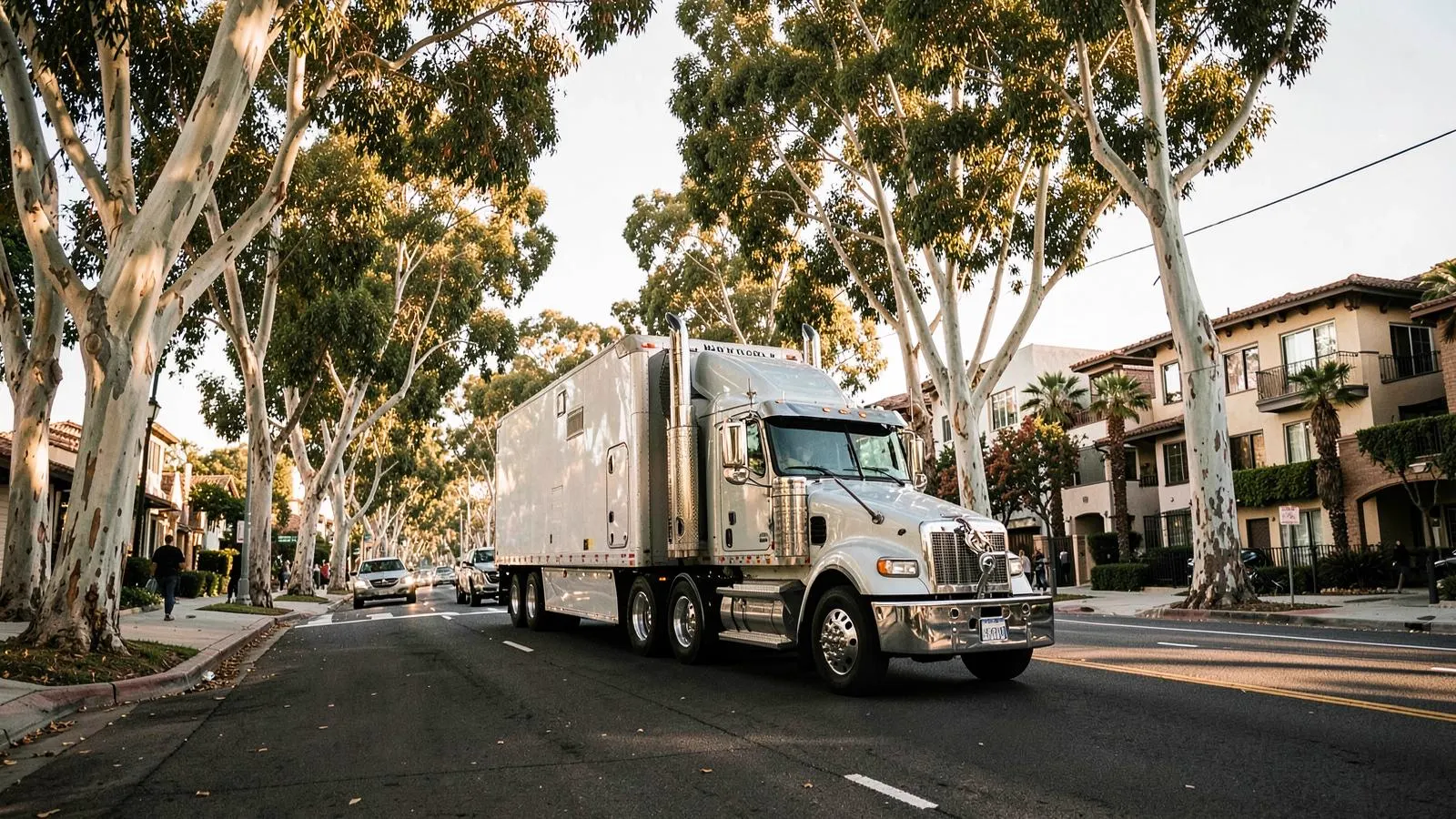
A Brentwood truck accident claim may involve several responsible parties, commercial insurance policies, and evidence controlled by a trucking company. Acting quickly can help preserve records and protect your right to seek compensation.
A truck accident claim in Brentwood is different because the driver may not be the only party responsible. The trucking company, a maintenance provider, a cargo company, or a defective-parts manufacturer may also share fault, and key evidence can disappear unless it is preserved quickly.
Why Truck Accident Claims Are More Complicated
A collision involving a commercial truck is not simply a larger car accident. The truck may be owned, operated, loaded, maintained, and insured by different companies.
Each company may have its own lawyers and insurers. They may begin investigating immediately, so getting evidence early can matter.
More Than One Party May Be Responsible
The truck driver may be liable for speeding, distraction, unsafe lane changes, fatigue, or another careless act. An employer may also be responsible for negligence by a driver acting within the scope of the job.
Other possible defendants can include the truck owner, maintenance contractor, cargo loader, broker, or manufacturer. Whether any party is liable depends on the evidence and its role in the crash.
Important Evidence May Be in Company Hands
A trucking company may possess driver logs, inspection records, maintenance documents, dispatch messages, hiring files, training records, and electronic truck data. Cargo records and onboard video may also be important when they exist.
A lawyer can send a written preservation notice telling the appropriate parties not to destroy relevant evidence. Waiting can make it harder to prove what happened.
Serious Injuries Can Take Time to Measure
The size and weight of a commercial truck can lead to severe injuries. You may need ongoing treatment, time away from work, or help with daily activities.
It is often unsafe to evaluate a claim before doctors know your diagnosis, treatment needs, and likely recovery. An early offer may not account for future care or lasting limits.
How Fault Is Proven in California
A successful claim generally requires proof that someone failed to use reasonable care and caused your injuries. Evidence may include photographs, video, witness accounts, vehicle damage, medical records, electronic data, and company documents.
California follows pure comparative negligence. If you share some fault, your compensation can be reduced by your percentage of responsibility rather than automatically barred.
This rule makes a careful investigation especially important. Trucking companies and insurers may argue that you were speeding, following too closely, or failed to avoid the collision.
Commercial Rules May Affect the Case
Commercial drivers and trucking businesses may have duties involving driver qualifications, vehicle inspections, maintenance, cargo securement, and driving time. A violation can be useful evidence, but it does not automatically decide every claim.
Your lawyer may compare company records, electronic information, physical evidence, and witness statements. The goal is to determine which act caused the crash and who controlled that part of the trucking operation.
What Determines the Value of a Truck Accident Claim?
No honest evaluation can be based only on the fact that a truck was involved. The value depends on your losses, the strength of the evidence, and the insurance or assets available.
- Injury severity: Your diagnosis, pain, physical limits, and whether an injury is permanent.
- Medical care: Past treatment, necessary future care, rehabilitation, medication, and medical equipment.
- Lost income: Missed work and any reduced ability to earn income in the future.
- Daily impact: Changes to sleep, mobility, family responsibilities, hobbies, and independence.
- Liability evidence: How clearly the records, witnesses, and physical evidence show fault.
- Shared fault: Whether you may be assigned part of the responsibility under California law.
- Available coverage: The applicable insurance policies and any responsible parties with available assets.
- Property damage: Repair or replacement losses and other crash-related expenses.
Medical records should connect your injuries and treatment to the collision. Gaps in care or unsupported future treatment claims can become points of dispute.
California Deadlines That May Apply
California generally gives you two years from the injury date to file a personal injury lawsuit (CCP §335.1). Missing the deadline can end your right to recover, even if the other party appeared responsible.
Some cases have shorter or different deadlines. If a public entity or public employee may be responsible, a government claim generally must be presented within six months (Government Code §911.2).
Other exceptions can affect when time begins or ends. It is safer to have the deadline reviewed promptly rather than assume the ordinary rule applies.
What to Expect From the Claims Process
The process usually begins with an investigation. This can include identifying every involved business, reviewing available insurance, preserving records, speaking with witnesses, and documenting your injuries.
Your medical condition then needs to be evaluated carefully. Once the evidence and losses are clear enough, a demand may be presented to the responsible insurers.
If the parties cannot agree, a lawsuit may be necessary. Filing a lawsuit does not mean the case will definitely go to trial, but it allows evidence to be requested through a formal process and protects the claim from the filing deadline.
What to Do After a Crash
- Get medical care. Some serious symptoms may not be obvious at first. Tell your provider how the crash happened and describe every symptom accurately.
- Report the collision. Cooperate with the appropriate authorities and give truthful, concise information without guessing.
- Photograph what you safely can. Capture the vehicles, damage, road conditions, markings, cargo, company names, and identifying numbers on the truck.
- Collect contact details. Get information from the driver and witnesses, along with the trucking company and insurance information that is available.
- Protect physical evidence. Keep damaged personal items and avoid repairing or disposing of your vehicle before it has been documented.
- Save all records. Keep medical paperwork, receipts, work-loss records, photographs, messages, and insurance correspondence together.
- Avoid recorded statements without advice. An insurer may ask questions designed to limit the claim. You can first speak with a lawyer about your rights.
- Stay off social media. Photos and comments may be taken out of context and used to challenge your injuries.
- Ask for legal help early. Prompt action can help preserve electronic data, logs, maintenance records, and other company evidence.
Frequently Asked Questions
Can I sue the trucking company and the driver?
Possibly. The driver may be responsible for careless driving, while the trucking company may be liable for the driver's conduct or for its own hiring, training, supervision, or maintenance failures. The facts and business relationships determine who can be included.
What if the trucking company blames me?
You may still have a claim because California uses pure comparative negligence. Your recovery can be reduced by your share of fault, so evidence showing how the collision happened is important.
Should I accept the insurance company's first offer?
Do not decide until you know the nature of your injuries and likely future needs. A quick offer may leave out future medical care, lost earning ability, or lasting effects on your daily life.
What evidence should be preserved after a truck crash?
Useful evidence can include driver logs, electronic truck data, maintenance and inspection records, dispatch communications, cargo documents, photographs, videos, and witness information. A preservation notice can help prevent relevant company records from being destroyed.
How long do I have to bring a truck accident claim?
California generally allows two years to file a personal injury lawsuit (CCP §335.1). A claim involving a public entity generally must be presented within six months, and other exceptions may change the deadline.
Can I recover if I was partly responsible?
Yes, California's pure comparative negligence rule can allow recovery even when you share fault. Your compensation is reduced according to the percentage of responsibility assigned to you.
What losses can be included in my claim?
A claim may include medical expenses, lost income, reduced earning ability, property damage, pain, and the impact of injuries on daily life. The available evidence, seriousness of the harm, liability, and insurance coverage all affect the outcome.
If you were hurt in a Brentwood truck accident, Hollywood Injury Law Center — Bash & Polyachenko P.C. can review what happened and explain your options. Call (323) 850-0101 for a free consultation.
Intersection Crash Data — Brentwood
| Intersection | Crashes | Injuries | Fatalities | Data Period | Source |
|---|---|---|---|---|---|
| San Vicente Boulevard, Saltair Avenue to 26th Street | — | — | — | 2024 analysis | LADOT, Vision Zero High Injury Network (2024) |
| South Bundy Drive, San Vicente Boulevard to Texas Avenue | — | — | — | 2024 analysis | LADOT, Vision Zero High Injury Network (2024) |
| Montana Avenue, Gretna Green Way and Avondale Avenue | — | — | — | 2024 analysis | LADOT, Vision Zero High Injury Network (2024) |
- San Vicente Boulevard, Saltair Avenue to 26th Street: On LADOT's bicycle High Injury Network. No segment of the all-modes network falls inside the Brentwood boundary.
- South Bundy Drive, San Vicente Boulevard to Texas Avenue: On LADOT's motorcycle High Injury Network.
- Montana Avenue, Gretna Green Way and Avondale Avenue: Each carries a segment of the bicycle High Injury Network through Brentwood.
Local Resources
Where the case would be filed
Santa Monica Courthouse, 1725 Main Street, Santa Monica, CA 90401
Santa Monica
Frequently Asked Questions
This page is general information about California law, not legal advice, and reading it does not create an attorney-client relationship. Hollywood Injury Law Center — Bash & Polyachenko P.C. is licensed to practice in California.