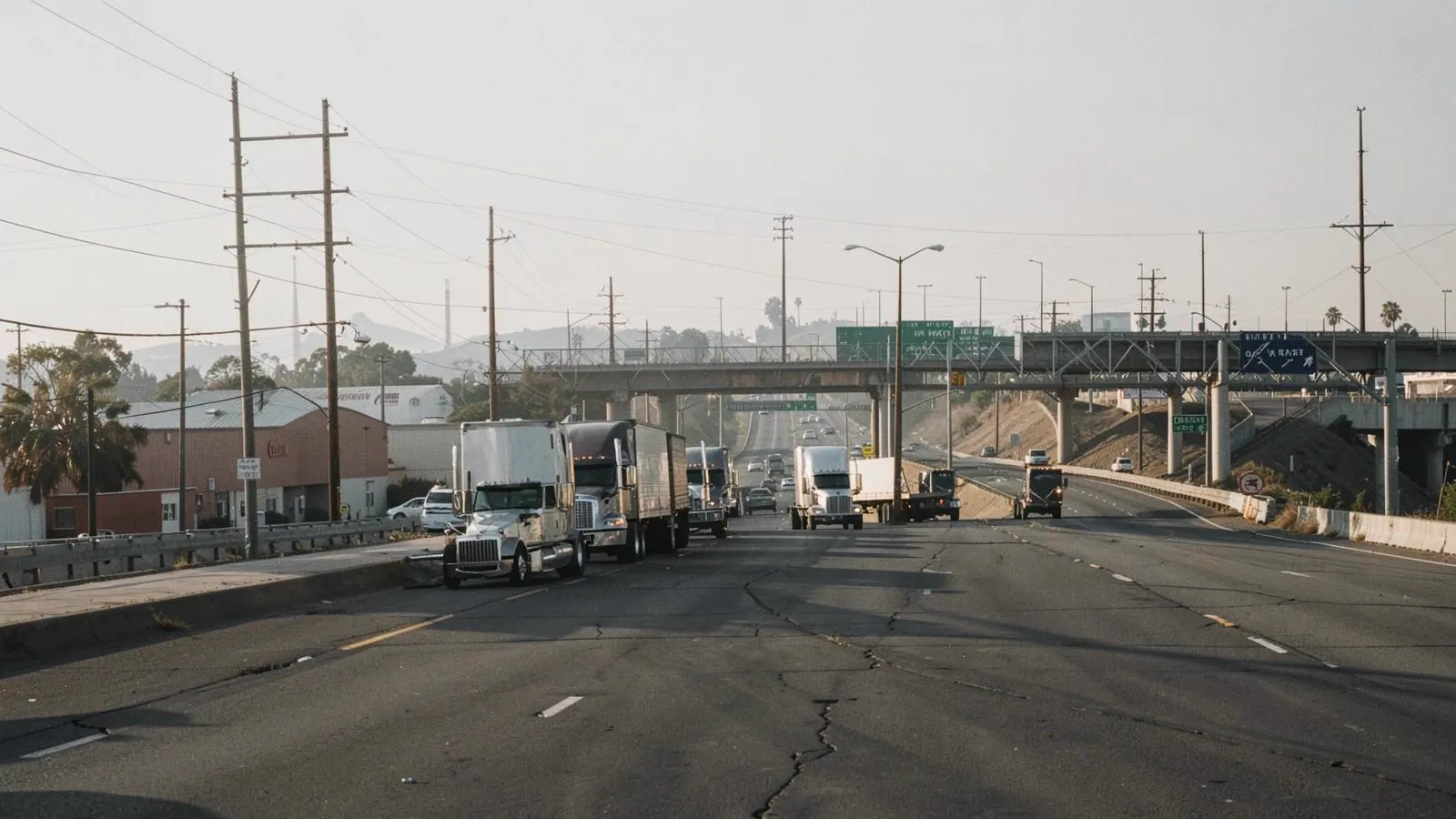
A Downey truck accident claim may involve severe injuries, several responsible parties, commercial insurance, and evidence controlled by a trucking company. Acting quickly can help preserve records and protect your right to seek compensation.
A truck accident claim in Downey is different because the crash may involve several responsible parties, commercial insurance policies, and evidence held by a trucking company. Truck cases also require a close review of the driver, vehicle, cargo, maintenance, and company practices. The value of your claim depends on your injuries, losses, available insurance, and proof of fault.
Why Truck Accident Claims Are More Complicated
A passenger-car claim often focuses on the conduct of one driver. After a truck crash, responsibility may extend beyond the person behind the wheel.
Depending on the facts, potentially responsible parties may include the truck driver, the driver’s employer, the truck owner, a maintenance provider, or a company involved in loading the cargo. Each party’s conduct and relationship to the truck must be investigated before fault can be assessed.
Commercial Records Can Be Important Evidence
Trucking companies may hold records that help explain why a crash happened. These can include driver logs, inspection and maintenance documents, dispatch records, training materials, electronic vehicle information, and cargo records.
Some evidence may be lost, overwritten, or discarded if it is not requested promptly. A lawyer can send a written preservation notice telling the parties to keep relevant materials.
The Injuries May Be Severe
A large truck can cause serious harm to people in smaller vehicles. You may need emergency treatment, follow-up care, rehabilitation, medication, or help with daily tasks.
It is important to consider both your current condition and your likely future needs. Accepting a final settlement before your medical outlook is clear may leave you responsible for later expenses.
How Fault Is Determined
Fault depends on the evidence. Investigators may examine whether the driver was speeding, distracted, impaired, following too closely, making an unsafe lane change, or driving while too tired.
The investigation may also look at poor maintenance, unsafe loading, inadequate training, or pressure to meet an unreasonable schedule. Witness statements, photographs, video, vehicle damage, medical records, and commercial documents may all matter.
Can the Trucking Company Be Responsible?
A trucking company may be responsible for its own conduct, such as unsafe hiring, training, supervision, or maintenance. An employer may also be responsible for an employee’s negligence when the employee was acting within the scope of the job.
The company may argue that the driver was an independent contractor or was not working at the time. The written contract matters, but the real working relationship and the company’s level of control may matter too.
What If You Were Partly at Fault?
California follows pure comparative negligence. This means you may still recover compensation if you share fault, but your recovery is reduced by your percentage of responsibility.
Insurers may try to place more blame on you by questioning your speed, attention, or reaction. Do not guess about fault or give a recorded statement before you understand what the evidence shows.
What Determines the Value of a Downey Truck Accident Claim?
No responsible lawyer can value your claim based only on the type of crash. The result depends on your evidence, injuries, financial losses, degree of fault, and available insurance coverage.
- Medical care: Emergency treatment, appointments, therapy, medication, equipment, and reasonably expected future care may be considered.
- Lost income: Your claim may include missed work and reduced ability to earn income in the future.
- Injury severity: Lasting pain, disability, scarring, or limits on daily activities can affect the claim.
- Pain and emotional harm: Physical pain, anxiety, sleep problems, and loss of enjoyment of life may be relevant.
- Property damage: Repair or replacement issues and other crash-related property losses may be included.
- Liability evidence: Clear proof of fault can strengthen your position, while a genuine dispute may affect the outcome.
- Insurance coverage: The policies and legally responsible parties involved can affect what compensation is available.
Insurance companies may ask for broad medical authorizations or press for a quick settlement. You should understand the full effect of your injuries before signing a release because a settlement usually ends the claim.
California Deadlines That May Apply
California generally gives you two years from the injury date to file a personal injury lawsuit (CCP §335.1). Missing the deadline can prevent you from recovering compensation, even if the other party caused the crash.
Different and much shorter rules can apply when a public entity is involved. A claim involving a government vehicle, public employee, or dangerous public property condition may require an administrative claim within six months (Government Code §911.2).
Other exceptions can change the deadline, but you should not assume one applies. Early action also gives your legal team more time to preserve truck records, locate witnesses, and inspect the vehicles.
What to Do After a Crash
- Call for emergency help. Report the collision and request medical assistance if anyone may be injured.
- Get medical care. Some injuries are not obvious right away. Tell your provider about every symptom and follow the treatment plan.
- Photograph the scene if it is safe. Capture vehicle positions, damage, road conditions, skid marks, signs, cargo, and identifying information on the truck.
- Collect information. Get the truck driver’s name, employer, insurance details, license information, and truck and trailer identification. Ask witnesses for their contact details.
- Do not argue about fault. Give accurate basic information, but avoid guesses or admissions.
- Preserve your evidence. Keep damaged property, photographs, medical paperwork, receipts, work records, and all messages from insurers.
- Avoid posting about the crash. Insurers may use social media posts to challenge your injuries or account of the collision.
- Speak with a truck accident lawyer promptly. A lawyer can identify responsible parties, request preservation of commercial records, and handle insurance communications.
Frequently Asked Questions
Who can I sue after a truck accident in Downey?
The truck driver may not be the only responsible party. Depending on the evidence, a claim may involve the employer, truck owner, maintenance provider, cargo-loading company, or another party whose conduct contributed to the crash.
Should I talk to the trucking company’s insurance adjuster?
You should be cautious. An adjuster may ask for a recorded statement, medical authorization, or quick settlement, but anything you provide could be used to limit the claim. You can have a lawyer communicate with the insurer for you.
What evidence should be saved in a truck accident case?
Useful evidence may include photographs, videos, witness information, medical records, receipts, employment records, and damaged property. Truck-specific evidence may include driver logs, maintenance documents, dispatch records, cargo information, and electronic vehicle data.
Can I recover compensation if I was partly responsible?
Yes. Under California’s pure comparative negligence rule, you may recover compensation even if you share fault. Your recovery is reduced according to the percentage of responsibility assigned to you.
How long do I have to file a truck accident claim?
California’s general deadline for a personal injury lawsuit is two years from the injury date (CCP §335.1). A claim involving a public entity may require an administrative claim within six months, so it is wise to get advice quickly.
What losses can a truck accident claim cover?
A claim may seek compensation for medical care, future treatment, lost income, reduced earning ability, property damage, pain, and the ways the injury affects your life. What is recoverable depends on your proof, the severity of your injuries, fault, and available insurance.
What if the trucking company says the driver was an independent contractor?
That label does not always decide responsibility. The driver’s duties, the company’s control, the working relationship, and the circumstances of the trip must be examined.
Why should I contact a lawyer soon after the crash?
Commercial records and electronic information may not remain available forever. Early legal help can preserve evidence, identify all responsible parties, track filing deadlines, and protect you during insurer communications.
If you were hurt in a truck accident in Downey, you do not have to face the trucking company and its insurers alone. Call Hollywood Injury Law Center — Bash & Polyachenko P.C. at (323) 850-0101 for a free consultation.
Frequently Asked Questions
This page is general information about California law, not legal advice, and reading it does not create an attorney-client relationship. Hollywood Injury Law Center — Bash & Polyachenko P.C. is licensed to practice in California.